

Plantar Fasciitis Treatment In Hoffman Estates, IL
That sharp, stabbing pain through your heel with your first steps in the morning is one of the most recognizable signs of plantar fasciitis. We treat the tissue damage and the mechanical factors that keep it from going away on its own.
Content Reviewed By: Dr. Cameron Clark, D.C. on October 14, 2026
Illinois State Chiropractic License Number: 038-011121 (NPI: 1083891477)
Plantar Fasciitis Treatment At A Glance
Plantar fasciitis is the most common source of heel and arch pain, affecting runners, teachers, retail workers, and anyone who spends significant time on their feet. The sharp, stabbing pain that accompanies the first steps in the morning or after prolonged sitting is one of the most recognizable features of the condition, and for many patients it persists for months without resolving on its own.
At Advanced Physical Medicine and Rehab in Hoffman Estates, we treat plantar fasciitis by targeting the tissue damage and mechanical factors that drive the condition. Shockwave therapy, laser therapy, chiropractic care, and rehabilitation can work together to reduce pain, support tissue repair, and correct the movement and loading patterns that caused the problem to develop in the first place.

What Is Plantar Fasciitis?
Plantar fasciitis is an overuse condition affecting the plantar fascia, a thick band of connective tissue that runs along the bottom of the foot from the heel bone (calcaneus) to the base of the toes. The plantar fascia supports the arch of the foot and plays a critical role in normal walking mechanics, absorbing impact and helping the foot propel off the ground with each step.
When the plantar fascia is subjected to repetitive loading beyond what the tissue can recover from, small tears develop within the fascial fibers near the heel attachment. The resulting inflammation and mechanical irritation produce the characteristic heel pain associated with the condition.
Despite its name, research has increasingly shown that chronic plantar fasciitis often involves tissue degeneration rather than active inflammation alone, which is one reason it does not always resolve with rest and anti-inflammatories. Conditions that place sustained tensile stress on the plantar fascia, whether from foot mechanics, footwear, training load, or muscle tightness, need to be corrected for lasting improvement.

Common Symptoms Of Plantar Fasciitis
Patients with plantar fasciitis in Hoffman Estates typically describe a very recognizable symptom pattern, even if they do not know the diagnosis by name.
The most characteristic symptom is sharp or stabbing heel pain on the first steps of the morning or after sitting or standing still for an extended period. This post-rest pain is caused by the plantar fascia tightening during inactivity and then being stretched abruptly when weight-bearing resumes. Many patients find that the pain eases after several minutes of walking, only to return after prolonged standing or exercise.
Pain is most often localized to the inner heel, at the point where the plantar fascia attaches to the calcaneus. Some patients also experience arch pain, particularly along the medial (inner) border of the foot.
Daily activities are often significantly affected. Patients report modifying how they walk to avoid heel contact, avoiding bare feet on hard floors, cutting back on exercise, and noticing that symptoms are worse after a long day of standing rather than during the activity itself.
What Causes Plantar Fasciitis?
Plantar fasciitis develops when repetitive tensile stress on the plantar fascia exceeds the tissue’s capacity to recover between loading cycles.
Tight calf muscles and Achilles tendons are among the most consistent contributors. When ankle dorsiflexion is restricted, the foot compensates during the walking cycle in ways that increase load on the plantar fascia with every step.
Training load changes are a frequent trigger in athletic patients. A sudden increase in running mileage, surface hardness, or frequency gives the plantar fascia less time to repair between sessions.
Flat feet (overpronation) and high arches both create abnormal loading patterns along the plantar fascia. Footwear that provides insufficient arch support or significant heel cushion can amplify these effects.
Body weight and prolonged standing also contribute. The plantar fascia carries a significant proportion of body weight during normal walking, and any factor that increases duration or intensity of that load raises the risk of tissue breakdown.
Conditions That Can Mimic Plantar Fasciitis
Several conditions produce heel or arch pain that closely resembles plantar fasciitis, making accurate diagnosis important before treatment begins.
Heel bursitis involves inflammation of the bursa at the back of the heel and produces pain in a slightly different location than classic plantar fasciitis. Fat pad syndrome, a condition involving atrophy or damage of the heel’s natural cushioning, also causes significant heel pain on weight-bearing.
Tarsal tunnel syndrome occurs when the tibial nerve is compressed near the ankle, producing heel and arch pain along with tingling and burning sensations in the sole of the foot. Stress fractures of the calcaneus produce pain that is typically diffuse and worsens consistently with activity, unlike the post-rest onset of plantar fasciitis. A thorough examination distinguishes these conditions and prevents care from being directed at the wrong structure.

When To Seek Urgent Care For Plantar Fasciitis
Plantar fasciitis is not typically a medical emergency, but certain heel pain presentations require urgent evaluation. Seek immediate care if heel pain follows a significant fall or impact, or if you notice sudden inability to bear weight, significant swelling, bruising, or signs of skin or soft tissue infection. Heel pain accompanied by fever, unusual warmth, or redness may indicate an infection that requires prompt medical attention.
What Our Patients Are Saying




How We Diagnose Plantar Fasciitis
Diagnosing plantar fasciitis at Advanced Physical Medicine and Rehab begins with a thorough history of when and how heel pain developed, what activities aggravate it, and what has been tried before.
Physical examination includes palpation of the heel and plantar fascia to confirm tenderness at the fascial attachment and assess the degree of tissue irritation. Ankle dorsiflexion range of motion and calf and Achilles flexibility are evaluated, as restrictions in these areas often contribute to excessive plantar fascia loading.
Gait analysis and lower extremity alignment assessment help identify foot mechanics and biomechanical factors that may be perpetuating the condition. When imaging is warranted to rule out a stress fracture or confirm the extent of tissue changes, we will order or review it as part of the diagnostic process.
How Advanced Physical Medicine And Rehab Treats Plantar Fasciitis
Plantar fasciitis treatment at Advanced Physical Medicine and Rehab focuses on reducing tissue irritation, supporting cellular repair within the plantar fascia, and correcting the mechanical factors that caused the condition to develop. Treatment plans are built around your specific diagnosis, activity level, and goals.

Shockwave Therapy
SoftWave and Piezo Wave shockwave therapy stimulate true tissue healing at the cellular level.
Learn More
Laser Therapy
Our Class 4 Summus Medical Laser accelerates healing, reduces inflammation, and relieves pain.
Learn More
Chiropractic Care
We perform thorough adjustments, review imaging, and deliver care plans built around measurable, lasting correction.
Learn More
Physical Therapy & Rehabilitation
We use Functional Movement Screening and Trigenics to identify and address movement dysfunction at the source..
Learn MoreWhy Early Treatment Matters For Plantar Fasciitis
Plantar fasciitis that persists for several months without appropriate treatment often transitions from an acute inflammatory response to a degenerative state, where the tissue has broken down faster than it can repair. At that stage, the condition becomes significantly harder to resolve and may require more intensive intervention. Early treatment aims to reduce tissue stress before degeneration advances, restore normal foot mechanics, and give the plantar fascia the conditions it needs to heal properly without months of compensatory limping or activity avoidance.
The Specialists Behind Your Personalized Care
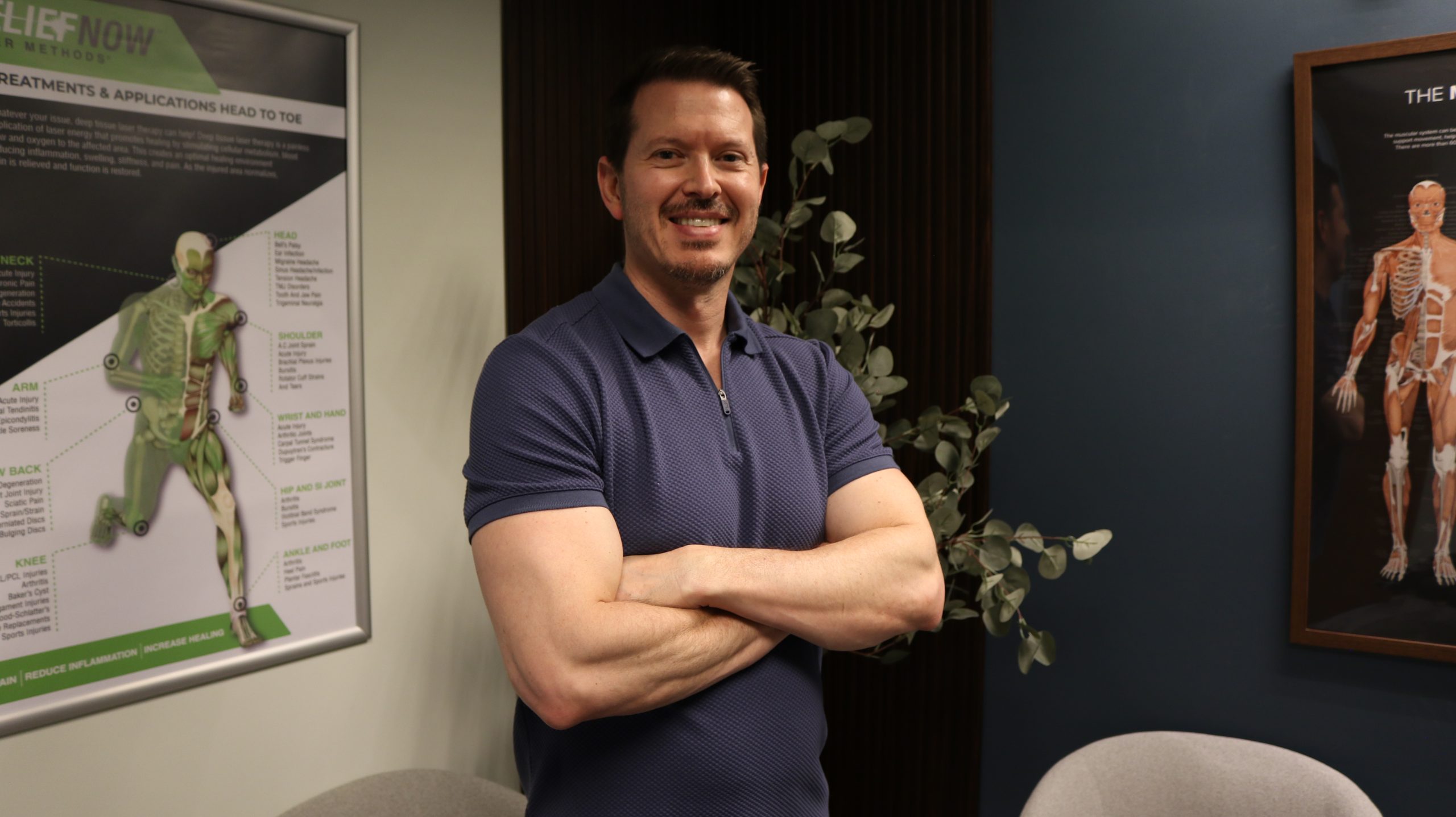
Dr. Cameron Clark, DC — Clinic Owner & Chiropractor
Meet The Doctor
Kyle — Therapy Assistant

Aleks — Therapy Assistant

Callie — Office Manager & Patient Liaison

Pam, Alexia, Deb — Front Desk
Serving Hoffman Estates And Nearby Illinois Communities
Advanced Physical Medicine and Rehab is located in Hoffman Estates, Illinois, and provides sciatica treatment for patients from Hoffman Estates, Barrington, Schaumburg, Palatine, Elgin, and Streamwood.
Frequently Asked Questions About Plantar Fasciitis Treatment
Book Plantar Fasciitis Treatment In Hoffman Estates
Heel and arch pain that limits your movement, your training, or the way you start each morning can be addressed with the right diagnosis and plan. Contact Advanced Physical Medicine and Rehab to book an appointment or call to discuss your symptoms.